
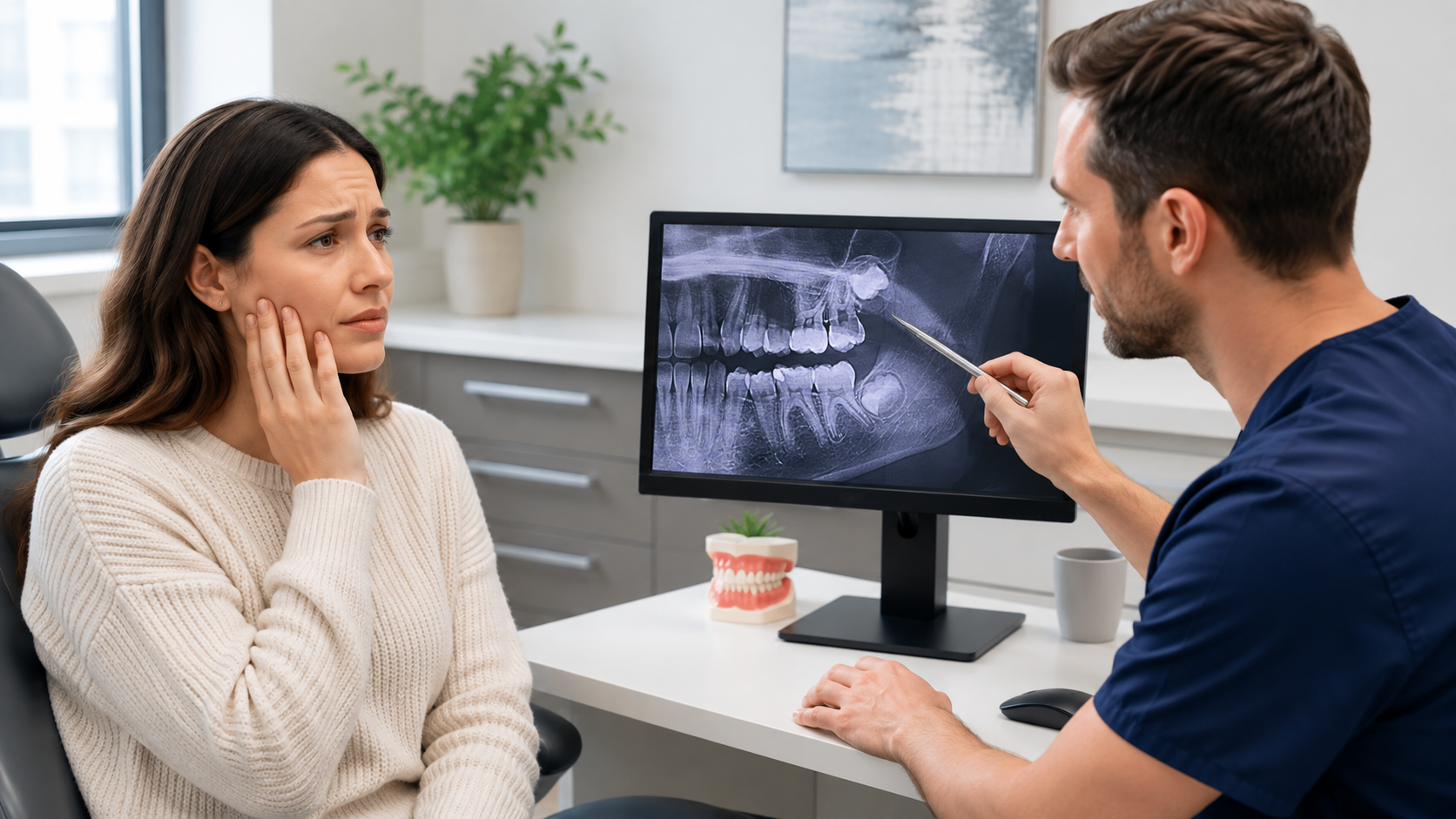
Wisdom teeth pain, pressure, swelling, or repeated discomfort should be assessed by a dentist, especially if the symptoms are getting worse, coming back often, or making it harder to eat, sleep, brush, or go about your day.
That doesn’t automatically mean you need a tooth extraction. Wisdom tooth discomfort can happen for different reasons, and the right next step depends on what a dentist sees during an assessment. The main thing is not to keep pushing through symptoms that are getting worse, changing, or hard to manage.
For patients in Toronto’s Little Italy, College Street Dentistry provides wisdom teeth care to help assess whether your third molars may be contributing to pain, pressure, or other concerns.
Why Wisdom Teeth Can Cause Pain or Pressure
Wisdom teeth are also called third molars. They usually sit at the very back of the mouth and often develop later than the rest of the adult teeth.
Some people have enough space for their wisdom teeth to come in without much trouble. Others may feel pressure, tenderness, or pain if a wisdom tooth is partially erupted, difficult to clean, angled awkwardly, or pressing against nearby teeth or gum tissue.
Pain or pressure can also come and go. You might notice discomfort while chewing, soreness near the back of the jaw, or a feeling that something is pushing behind your molars. Some people notice swelling around the gum near the wisdom tooth. Others only feel a dull ache or tightness.
Because these symptoms can overlap with other dental issues, it’s not possible to know the cause based on discomfort alone. A dental assessment can help determine whether the wisdom tooth is involved and whether monitoring, cleaning support, treatment, referral, or tooth extraction may be discussed.
Signs It May Be Time to Book a Dental Assessment
Mild pressure that disappears quickly may not feel urgent, but recurring or worsening symptoms are worth checking. Wisdom teeth can be hard to see and even harder to clean properly, so small problems may not be obvious at home.
Consider booking a dental assessment if you notice:
- Pain or pressure at the back of the mouth
- Gum tenderness around a wisdom tooth
- Swelling near the jaw or back molars
- Discomfort when chewing
- A bad taste or odour near the area
- Food getting trapped behind the last molar
- Trouble brushing or flossing around the wisdom tooth
- Symptoms that keep returning in the same spot
It’s also worth being assessed if you’re not sure whether a wisdom tooth has fully come in. A partially erupted wisdom tooth can create a small space where bacteria and food debris may collect. Even with careful brushing, that area can be difficult to keep clean.
Booking an assessment doesn’t mean you’re signing up for a procedure. It gives you better information, which is often the most helpful first step when something feels off.
When Wisdom Teeth Pain May Need More Urgent Attention
Not every wisdom tooth symptom is a dental emergency. Still, some changes should be taken more seriously, especially if they develop quickly or make normal function difficult.
More urgent attention may be needed if pain becomes intense, swelling spreads, you have trouble opening your mouth, you feel unwell, or discomfort is interfering with eating or sleeping. Sudden changes deserve a prompt call to a dental office so you can explain what’s happening and get guidance on the next step.
If symptoms feel severe or are worsening quickly, College Street Dentistry’s emergency dental care page can help you understand how the clinic approaches urgent dental concerns. Wisdom tooth discomfort can sometimes be part of a more immediate dental issue, but a dentist needs to assess the situation before any treatment recommendation can be made.
If you have swelling that affects breathing or swallowing, or you feel seriously unwell, seek urgent medical care right away.
What a Dentist Looks for Before Recommending Treatment
A dentist will not usually recommend a wisdom tooth extraction based on pain alone. First, they need to understand what is happening in the mouth and around the tooth.
During a wisdom tooth assessment, the dentist may look at the position of the tooth, the surrounding gum tissue, signs of irritation or infection, nearby teeth, bite pressure, and how easy the area is to clean. Dental X-rays may be used when needed to see what cannot be fully assessed visually, such as the tooth’s angle, roots, and relationship to surrounding structures.
The dentist may also ask questions like:
- When did the pain or pressure start?
- Is it constant or does it come and go?
- Is chewing difficult?
- Have you noticed swelling, bad taste, or bleeding?
- Has this happened before?
- Are symptoms getting better, worse, or staying the same?
These details matter. A wisdom tooth that causes mild occasional pressure may be managed differently from one linked with repeated swelling, decay, or damage to nearby teeth.
The point is to understand what’s actually going on before deciding what, if anything, needs to be done.
How Tooth Extraction Fits Into Wisdom Teeth Care
Tooth extraction may be recommended when a wisdom tooth is causing ongoing problems, is difficult to clean, is affecting nearby teeth, or is unlikely to function comfortably in the mouth. In some cases, removal may be discussed to reduce the risk of repeated issues. In other cases, monitoring or another approach may be more appropriate.
A dentist can explain what they see, whether the wisdom tooth appears to be contributing to your symptoms, and what options may make sense based on your assessment.
It’s helpful to think of tooth extraction as one possible part of wisdom teeth care, not the automatic result of having pain or pressure. Some wisdom teeth can be monitored. Some need additional cleaning support or follow-up. Some may need removal by a general dentist or referral to another dental provider, depending on the complexity of the case.
The best decision depends on the tooth’s position, your symptoms, your oral health, and what can be safely and appropriately managed after a dental assessment.
Wisdom Teeth Pain or Pressure FAQs
Does wisdom tooth pain always mean I need an extraction?
No. Wisdom tooth pain does not always mean you need an extraction. Pain can happen for different reasons, including gum irritation, food trapping, pressure, decay, or inflammation around the area.
A dentist needs to assess the tooth and surrounding tissues before recommending treatment. Tooth extraction may be discussed if the wisdom tooth is causing ongoing or repeated problems, but it is not the only possible outcome.
Can wisdom teeth cause pressure without severe pain?
Yes, wisdom teeth can sometimes cause pressure without sharp or severe pain. You may feel tightness at the back of the jaw, a dull ache, or pressure behind the molars.
Pressure can be mild at first, but it is still worth mentioning to a dentist if it keeps returning, gets worse, or comes with swelling, gum tenderness, or difficulty cleaning the area.
Should I wait for wisdom teeth pain to go away on its own?
If the discomfort is minor and disappears quickly, you may be tempted to wait. But if wisdom tooth pain returns, worsens, or affects eating, sleeping, brushing, or daily comfort, it’s better to book a dental assessment.
Waiting too long can make it harder to understand what is changing. A dentist can check whether the wisdom tooth is contributing to the symptoms and explain your options before the situation becomes more uncomfortable.
What should I do if wisdom tooth pain suddenly gets worse?
If wisdom tooth pain suddenly gets worse, contact a dental office and describe your symptoms clearly. Mention when the pain started, whether there is swelling, whether you can open your mouth normally, and whether you feel unwell.
Sudden or severe symptoms should not be ignored. If swelling affects breathing or swallowing, or you feel seriously ill, seek urgent medical care.
Can all dentists remove wisdom teeth?
Not all wisdom tooth cases are the same. Some extractions may be straightforward, while others can be more complex because of the tooth’s position, root shape, or nearby structures.
A dentist can assess the wisdom tooth and explain whether removal may be appropriate in-office or whether referral to another dental provider may be recommended. The assessment helps determine the safest and most suitable next step.
Talk to College Street Dentistry About Wisdom Teeth Pain or Pressure
Wisdom tooth pain or pressure can be frustrating because it’s not always clear what’s causing it. Maybe it feels like a dull ache. Maybe the gum at the back of your mouth is tender. Maybe the discomfort keeps disappearing and coming back.
You don’t have to figure it out on your own.
If you’re in Toronto’s Little Italy or nearby and are noticing wisdom tooth pain, pressure, swelling, or recurring discomfort, you can contact College Street Dentistry to discuss your symptoms and arrange a dental assessment. A dentist can evaluate the area, explain what may be contributing to the discomfort, and help you understand what next steps may be appropriate based on your needs.
